
Bringing the Outdoors In: How Nature-Inspired Interior Design Creates a More Balanced Home
There is something undeniably calming about being surrounded by nature. Whether it's the warmth of sunlight filtering through the trees, the texture of natural wood, or the peaceful greens of a mountain landscape, the outdoors has a way of making us feel grounded and connected.
Explore the full Town Mountain Home project in the Align Design residential portfolio.
Living in Western North Carolina, I'm constantly inspired by the natural beauty that surrounds us. From the Blue Ridge Mountains to the changing colors of the seasons, there is no shortage of inspiration for creating interiors that feel both beautiful and intentional.
One of my favorite approaches to interior design is bringing the outdoors in—incorporating natural materials, organic textures, earthy colors, and thoughtful design elements that create a stronger connection between our homes and the natural world.
This approach is often referred to as biophilic design, and it's about much more than adding a few houseplants.
It's about creating a home that feels harmonious, restorative, and connected to its surroundings.
What Is Biophilic Interior Design?
Biophilic design is an approach to architecture and interior design that incorporates elements of nature into the spaces where we live and work.
The concept is rooted in our natural connection to the environment and the idea that thoughtfully designed spaces can support comfort, well-being, and a greater sense of balance.
In interior design, this can take many forms:
Incorporating natural materials such as wood, stone, linen, and clay
Maximizing natural light and views of the outdoors
Choosing colors inspired by the surrounding landscape
Introducing plants and natural greenery
Using organic shapes and textures
Creating a seamless connection between indoor and outdoor living spaces
What I love most about this approach is its versatility.
A nature-inspired home doesn't have to look rustic, overly earthy, or filled with plants. It can be modern, traditional, minimalist, or eclectic.
The goal is to create a space that feels connected to nature while still reflecting your personal style and the way you live.
Start With a Color Palette Inspired by Nature
One of the simplest ways to bring the outdoors into your home is through color.
Nature provides an incredibly sophisticated palette, and it's one I frequently turn to when designing interiors.
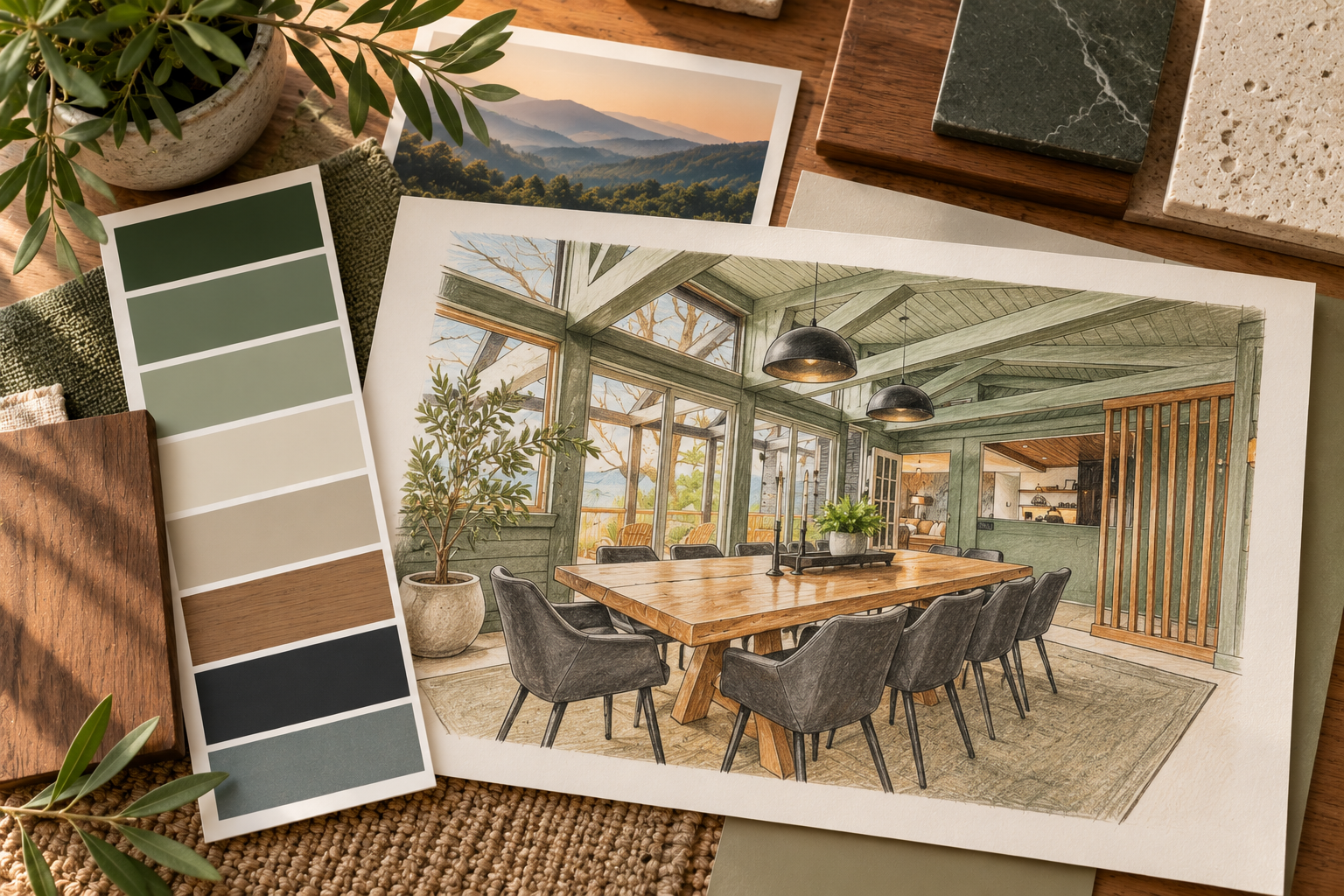
Soft greens, warm browns, muted blues, creamy neutrals, and earthy tones can create a sense of calm and continuity throughout a home.
In particular, green is one of my favorite colors to incorporate into interior design.
It can feel peaceful, grounding, sophisticated, or dramatic depending on the shade and how it's used.
A deep olive green can create an intimate, enveloping atmosphere, while a softer sage can make a room feel light and restorative.
When choosing colors, I also consider what exists beyond the windows.
If a home overlooks wooded hillsides, mountains, or a lush garden, incorporating complementary tones indoors can create a beautiful visual connection between the interior and exterior.
The result is a home that feels like a natural extension of its environment.
Natural Materials Bring Warmth and Character
There is something special about materials that have texture, variation, and a sense of history.
Wood grain, natural stone, handmade tile, woven textiles, and organic finishes bring warmth and individuality into a space.
Unlike perfectly uniform manufactured surfaces, natural materials often contain subtle imperfections that make them interesting.
I love incorporating materials that tell a story, whether it's a reclaimed wood mantel, a handcrafted dining table, or a piece of stone with beautiful natural movement.
These details add character while helping a home feel more grounded and inviting.
When selecting materials, I consider not only how they look but also how they feel, how they will age, and how they interact with the surrounding elements.
A beautifully designed home should engage more than just our sense of sight.
Texture, warmth, comfort, and the experience of moving through a space are equally important.
Let Natural Light Shape Your Space
Natural light is one of the most powerful elements in interior design.
It can change the appearance of colors, highlight architectural details, and influence how a room feels throughout the day.
Whenever possible, I look for opportunities to make the most of the natural light already available in a home.
Sometimes that means reconsidering furniture placement so windows remain unobstructed. Other times, it involves selecting lighter finishes, using reflective surfaces thoughtfully, or adjusting the layout to improve the flow of light between rooms.
Window treatments also play an important role.
The right combination of privacy, softness, and light control can help a space feel comfortable without disconnecting it from the outdoors.
Even homes without expansive mountain views can benefit from thoughtful natural lighting.
The goal is to work with the light rather than against it.
Create a Connection Between Indoor and Outdoor Living
One of the most rewarding aspects of designing a home is finding opportunities to strengthen the connection between interior and exterior spaces.
This is particularly meaningful in Asheville and the surrounding mountain communities, where outdoor living is such an important part of everyday life.
Large windows, thoughtfully placed doors, outdoor gathering spaces, and consistent material choices can help create a natural transition between the home and its surroundings.
Even subtle design decisions can make a difference.
Carrying similar colors from an interior room onto a covered porch, repeating natural materials, or positioning furniture to take advantage of a beautiful view can help the spaces feel connected.
When indoor and outdoor environments work together, the home often feels more open, cohesive, and welcoming.
A Mountain Home Inspired by Its Surroundings
One of my favorite examples of bringing the outdoors in is a recent job - Town Mountain Home.
When I began reimagining this 1950s ranch, I knew I wanted the interior to reflect the incredible long-range mountain views and city skyline surrounding the property.
The home had beautiful potential, but the existing interiors didn't fully complement the landscape.
My goal was to create a warm, organic environment that felt grounded in its setting while incorporating the comforts and functionality of modern living.
Layering Greens and Natural Textures
Throughout the home, I incorporated shades of green, warm wood tones, organic textures, and black accents.
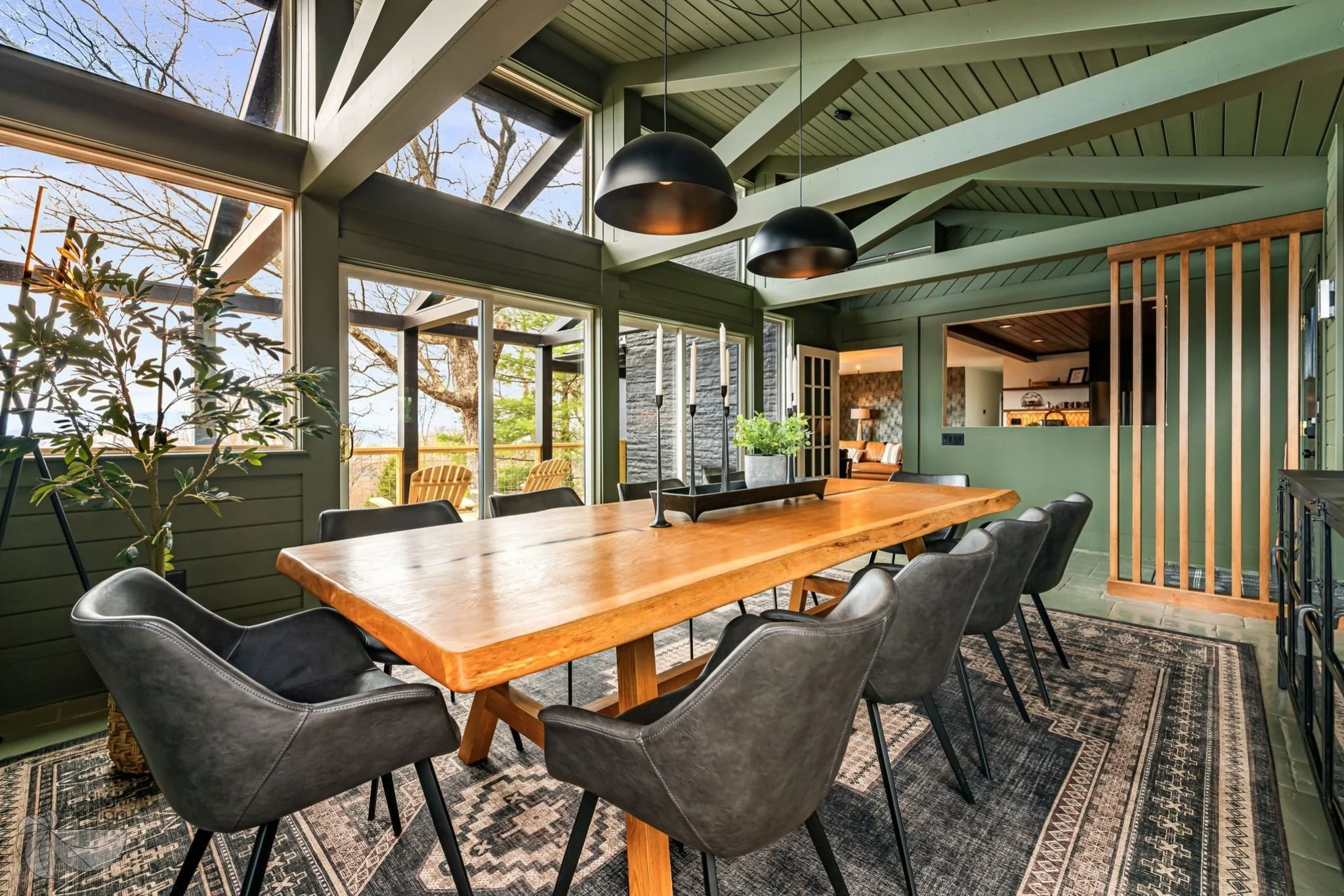
In the dining room, I chose Benjamin Moore's Dark Olive for a color-drenched effect, carrying the exterior color into the interior to create a stronger visual relationship between the two.
The result is a rich, enveloping space that feels both sophisticated and connected to nature.
A custom ten-foot dining table, crafted by a local artisan using sustainably sourced wood from the historic Biltmore Estate grounds, adds another meaningful connection to the region.
Rather than selecting pieces solely for their appearance, I wanted materials that carried a sense of place and purpose.
Reclaimed Materials With a Story
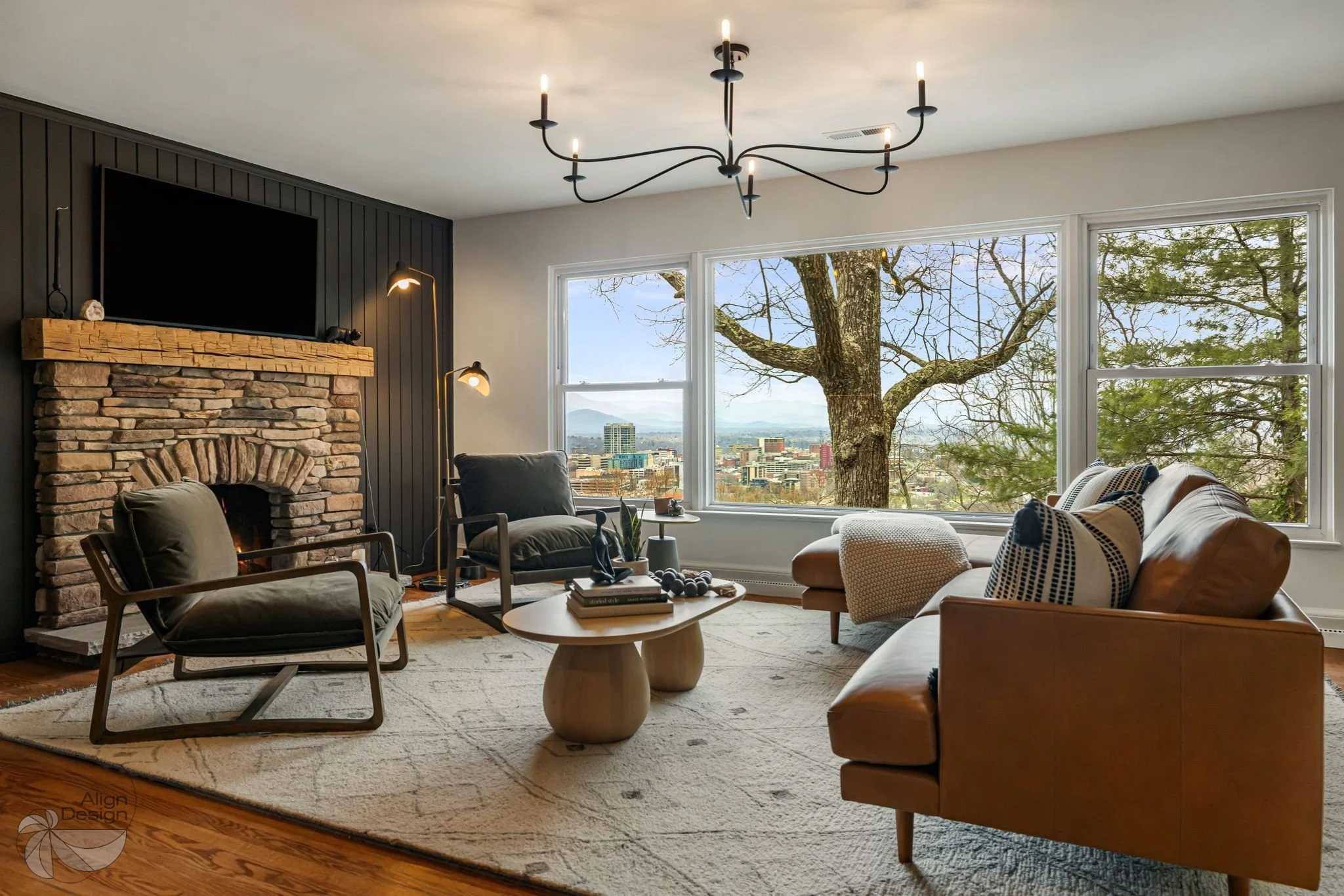
The fireplace features a mantel reclaimed from an 1800s-era barn in a neighboring town, paired with a new stone surround.
I love the contrast between old and new.
Reclaimed materials bring a sense of history and authenticity that can't always be recreated with something brand-new.
In the kitchen, a tongue-and-groove ceiling, wood beam, black cabinetry, butcher block countertops, and a waterfall island with Silestone Bohemian Flame create a balance of natural warmth and modern design.
Each element contributes to the home's overall feeling of connection and continuity.
Bringing the Mountains Into the Primary Suite
One of the more interesting design challenges involved the primary bedroom.
Although the property offers incredible mountain views, the primary suite doesn't have windows facing that scenery.
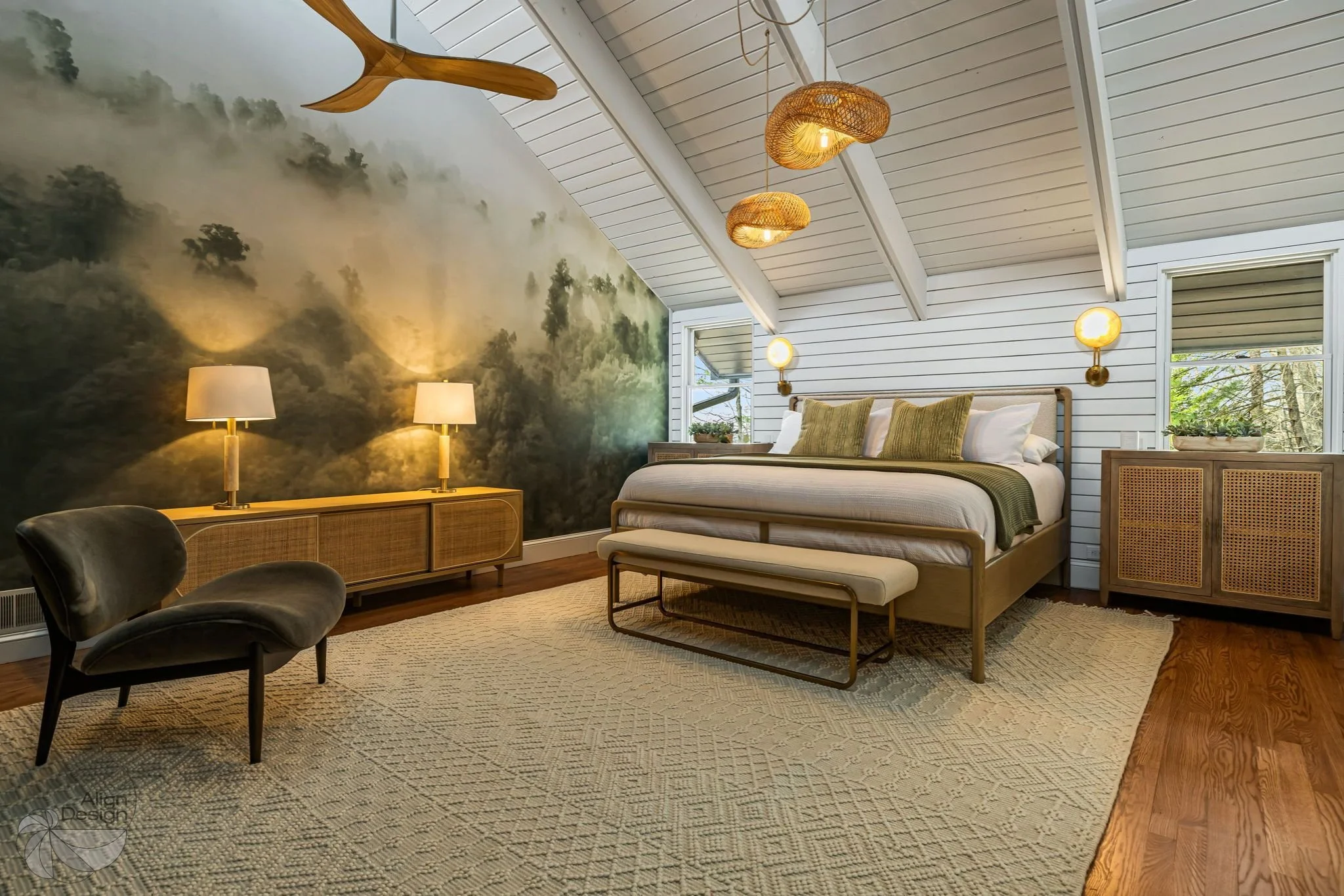
Rather than letting the room feel disconnected from the landscape, I incorporated a full-height wall mural depicting the surrounding mountains.
It creates a visual connection to the outdoors while giving the room its own peaceful identity.
The adjoining primary bathroom was reconfigured into a more spacious, spa-like retreat with soothing greens and organic elements.
The result is a home that feels connected to the natural environment, even in rooms where the landscape isn't directly visible.
Explore the full Town Mountain Home project in the Align Design residential portfolio.
How Feng Shui Complements Nature-Inspired Design
As a certified Feng Shui consultant, I also consider how a home's environment influences the way we experience it.
Feng Shui and biophilic design share an appreciation for balance, harmony, and the relationship between people and their surroundings.
While they are distinct approaches, I find that they complement one another beautifully.
Feng Shui encourages us to think intentionally about furniture placement, circulation, light, natural elements, and the overall energy of a space.
Biophilic design focuses on strengthening our connection to nature through materials, views, patterns, and sensory experiences.
Together, these ideas can help inform interiors that feel both visually balanced and personally meaningful.
For example, a room might benefit from a more thoughtful furniture arrangement, better access to natural light, softer textures, or the introduction of living greenery.
Sometimes the most impactful design decisions are also the simplest.
The goal isn't to follow a rigid set of rules. It's to create a home that feels comfortable, balanced, and supportive of your everyday life.
Bringing the Outdoors In Doesn't Require a Full Renovation
While nature-inspired design can be incorporated into a major home renovation, you don't need to remodel your entire house to begin.
Small, intentional changes can make a meaningful difference.
Consider introducing natural textiles such as linen, wool, or cotton. Add wood accents, handcrafted pottery, or a few carefully chosen plants. Revisit your lighting and furniture placement to make better use of windows and outdoor views.
You might also find that simplifying a room and removing unnecessary clutter allows the natural materials and architectural features to stand out.
The key is to be intentional rather than simply adding more.
A beautiful home doesn't need to be filled with objects to feel complete.
Sometimes, creating a greater sense of balance means allowing the space—and the materials within it—to breathe.
Designing a Home That Feels Connected to You
Ultimately, bringing the outdoors in is about more than following a design trend.
It's about creating an environment that reflects the natural world, supports your lifestyle, and helps your home feel like a place of comfort and connection.
Whether I'm designing a kitchen, reimagining a bathroom, or helping a client rethink an entire home, I always consider how the materials, colors, light, and layout work together.
I believe the most successful interiors are the ones that feel personal, intentional, and connected to the people who live in them.
And here in the mountains of Western North Carolina, we have an incredible source of inspiration right outside our doors.
Ready to Bring More Nature Into Your Home?
If you're considering a renovation or looking for ways to create a more balanced, nature-inspired home, I'd love to help.
At Align Design, I combine thoughtful interior design, natural materials, and an intentional approach to creating spaces that feel as beautiful as they look.
Whether you're drawn to organic modern interiors, earthy color palettes, or a home that better reflects the surrounding Asheville landscape, I can help you bring those ideas together in a way that feels uniquely yours.
Contact Align Design to start the conversation about creating a home that feels more connected, comfortable, and beautifully aligned with the way you live.